
Improve Agency Workflows Without Replacing Your AMS
An agency management system serves as a reliable core ledger. However, daily administrative friction often slows down your front desk. Fortunately, replacing the entire platform is rarely the most practical fix.
The Hidden Costs of Core System Overhauls
An Agency Management System (AMS) performs its primary job well. Specifically, it anchors documentation, policy histories, and broad accounting reports. However, team members often notice that daily intake tasks still require heavy manual input.
Consequently, leadership teams frequently consider switching to an entirely new system. Yet full database conversions carry significant disruption risks. In addition, staff retraining requires valuable time. More importantly, changing the core software rarely resolves edge intake problems.
Why Big Systems Struggle with Edge Routines
Standard database architectures focus primarily on broad record retention. Therefore, they are rarely optimized for rapid, task-specific data entry. Customer service representatives must still re-type information across disparate forms. As a result, administrative backlogs continue to grow despite the costly system upgrade.
Applying the Same Principle to Payment Intake
In commercial policy processing, administrative slowdowns historically began with static application files. Today, an identical operational gap often appears during payment collection.
For example, when clients remit funds, accounting ledgers frequently miss essential intake details:
- Payer metadata gaps: Commercial premiums are frequently paid by third-party payroll entities. Consequently, bookkeepers must spend extra time matching unlinked account names.
- Net deposit splits: Standard platforms like Xero reconcile bank payouts smoothly when fees are clearly separated. However, when processors deduct merchant fees silently, staff must search external portals to locate individual charges.
- Undocumented batching: When physical checks are deposited without structured intake schedules, tracing individual components becomes slow and complicated.
How Targeted Connectors Protect Back Office Hours
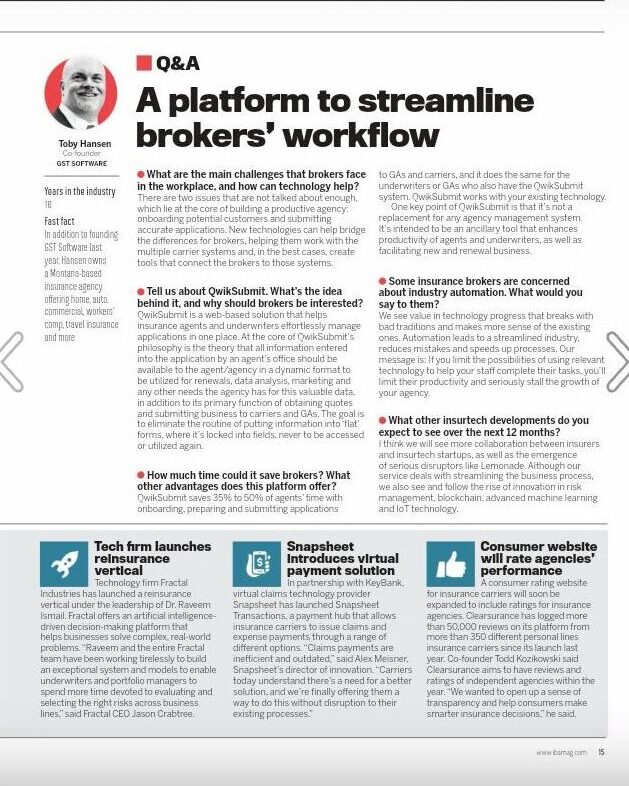
To solve this challenge, our team engineered ePayUs around the same foundational model. Crucially, it does not replace your accounting software. Instead, it captures payment details, tracks payer references, and prepares clean batch data. As a result, your downstream general ledger can finish reconciliation without manual matching delays.
Standardize Your Agency Intake Routine
Download our free workflow checklist for commercial brokerages. Specifically, discover steps for structuring deposit runs, organizing roles, and streamlining client collections.